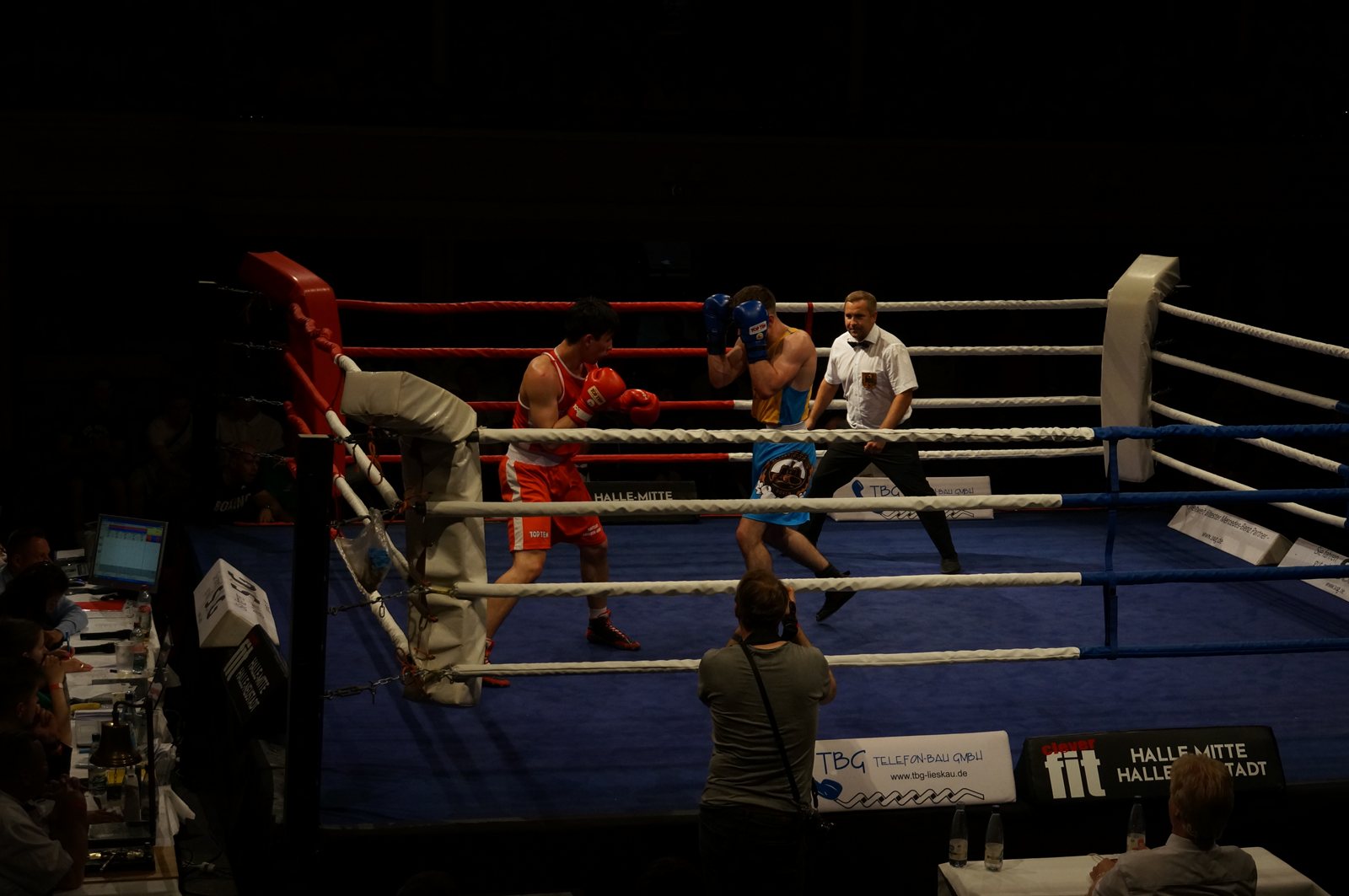
Halle Seeks Its Next Champions
The 51st Chemistry Cup brings U23 and elite boxers to Halle. Three tournament days will test technique, adjustment and recovery in equal measure.

The Chemistry Cup carries the weight of its history. From September 10 to 12, however, the 51st edition must demonstrate what the tournament is worth today. Men from the U23 and elite ranks will compete across nine weight divisions in Halle. As of September 2, BoxerBase lists 67 registrations—close to the event's maximum capacity of 72 competitors.
The central question is not simply who arrives with the most recognizable name. A knockout tournament demands several solutions in a short period: reading an unfamiliar style, winning a close contest, recovering and functioning again the following day. That compressed examination is the Chemistry Cup's real sporting appeal.
Three days, three examinations
The official invitation limits each division to eight boxers. Anyone entering at the quarterfinal stage and going on to win the title may therefore have to complete three bouts on three consecutive days. Contests are scheduled for three rounds of three minutes under the current World Boxing competition rules, with daily weigh-ins and medical examinations.
It is a compact format, but a very different demand from a single bout. There is no multi-week camp between a quarterfinal and a semifinal. Boxer and coach have only hours to assess what worked, manage minor damage and prepare for an opponent who may present a completely different style. A dominant opening win matters only if the boxer can perform again the next day.
67 registrations, no settled hierarchy
The current entry figure is encouraging, but it is not a final start list. Registrations can still disappear before arrival, the entry check and the first weigh-in. The complete participant list is not publicly visible at present. Declaring firm favorites before the draw and final field are confirmed would therefore be speculation.
The framework is clear. The tournament offers divisions at 55, 60, 65, 70, 75, 80, 85, 90 and over 90 kilograms, with every bout taking place in one ring. That makes development easy to compare. Who controls center ring? Who wins the final minute of a close round? Who can reproduce a strong performance after a demanding opening bout? For U23 boxers, those answers are more revealing than an unbeaten record built against familiar domestic opposition.
History adds weight, not victories
The first Chemistry Cup was staged in Halle in 1970, when 82 boxers from ten nations competed at the city's ice arena. Teófilo Stevenson, Henry Maske, Vitali Klitschko, Sven Ottke and Andreas Zülow are among the prominent fighters who later appeared at the tournament. Their names explain why the cup still carries particular resonance within German Olympic-style boxing.
They should not be mistaken for proof of the current edition's quality. After interruptions and a relaunch in 2021, the event has had to redefine itself. The 51st edition must earn relevance through the depth of its field and the quality of its bouts. History creates attention; the present competition determines whether that attention is deserved.
From sports hall to theatre
The quarterfinals begin at 11 a.m. on Thursday at the Bildungszentrum sports hall in Halle-Neustadt. The tournament moves to the Steintor-Varieté for Friday's semifinals and remains there for the finals from 6 p.m. on Saturday. The change gives the decisive rounds a more intimate stage without altering the competition itself.
Those unable to attend in Halle can watch the tournament live and on demand through Sportdeutschland.TV, according to the organizer. For an event of this kind, that reach is significant. It gives German U23 and elite boxers visibility beyond the coaches, clubs and federations already familiar with them.
What matters inside the ring
The most compelling names will emerge only after the draw and opening bouts. Until then, the most useful focus is on the qualities a tournament exposes: clear decisions under time pressure, disciplined work in close rounds and the ability to reset properly between competition days.
Winning the Chemistry Cup does not guarantee a major international or future professional career. It does provide a concentrated performance test. A boxer who solves different problems across three days in Halle has shown more than somebody who merely enjoyed one successful night. That is why the Chemistry Cup remains relevant: it identifies not only winners, but competitors capable of developing as a tournament unfolds.